What Is ATP?
ATP (adenosine triphosphate) is the primary energy molecule used by cells throughout the body.
Every process that requires energy — from muscle movement to brain function — ultimately depends on ATP production.
Most ATP is generated inside structures within our cells called mitochondria.
When ATP production is reduced or disrupted, the body may struggle to maintain normal energy levels.
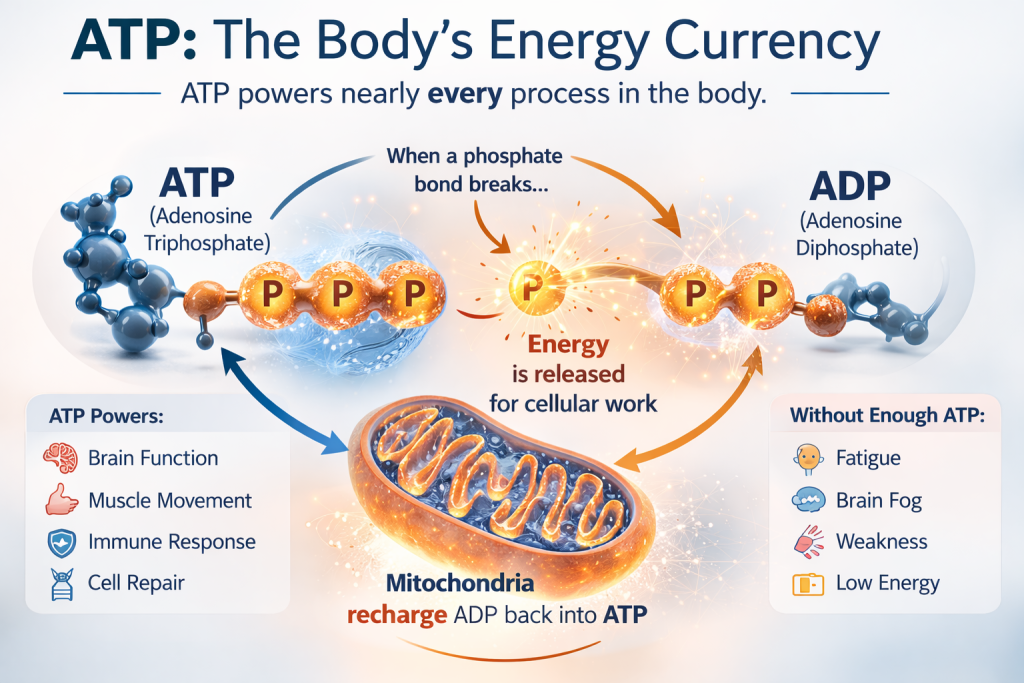
ATP acts like a rechargeable energy carrier inside cells. When one phosphate bond breaks, energy is released for cellular work, converting ATP into ADP. The mitochondria then help recharge the system.
The Role of Mitochondria
Mitochondria are often described as the power plants of the cell.
They convert nutrients and oxygen into usable cellular energy through a process known as cellular respiration.
This system supports:
Muscle activity
Brain function
Immune responses
Cellular repair
Because mitochondria exist in nearly every cell in the body, disruptions in mitochondrial function can affect many systems at once.
Most ATP is generated inside structures within our cells called mitochondria.
When ATP production is reduced or disrupted, the body may struggle to maintain normal energy levels.
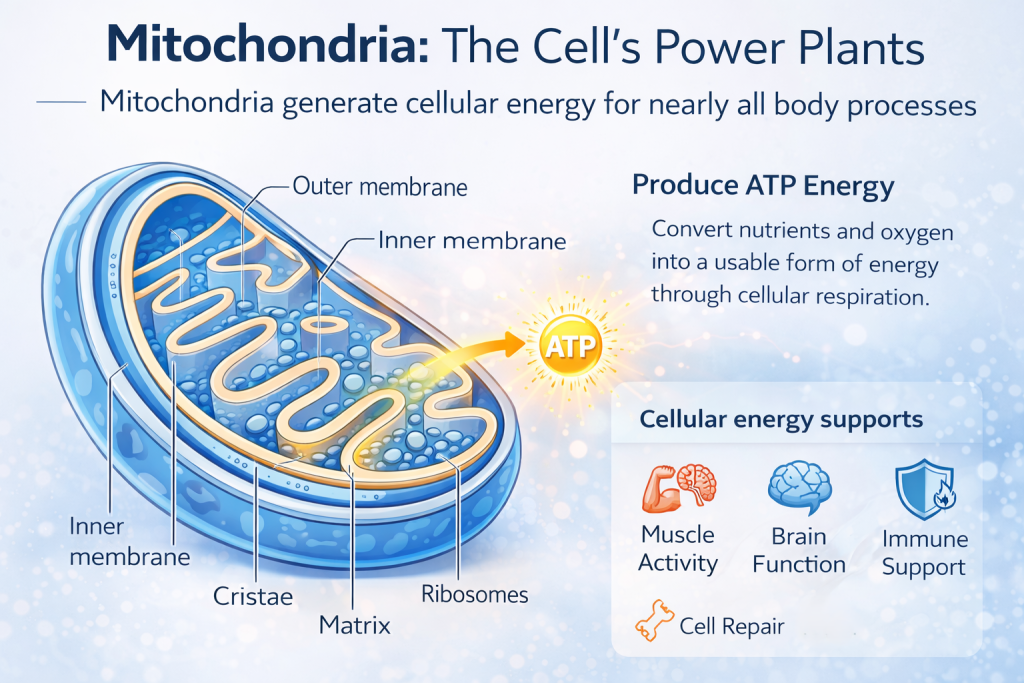
Mitochondria convert nutrients and oxygen into usable cellular energy. Because these structures exist in nearly every cell in the body, changes in mitochondrial function can affect many biological systems at once.
Why Fatigue Can Occur
Fatigue is not always simply a matter of rest or sleep.
When cellular energy production becomes strained, the body may experience symptoms such as:
persistent fatigue
brain fog
exercise intolerance
muscle weakness
These symptoms may appear even when standard medical tests show results within normal ranges.
Understanding how cellular energy systems function helps provide context for why these experiences can occur.
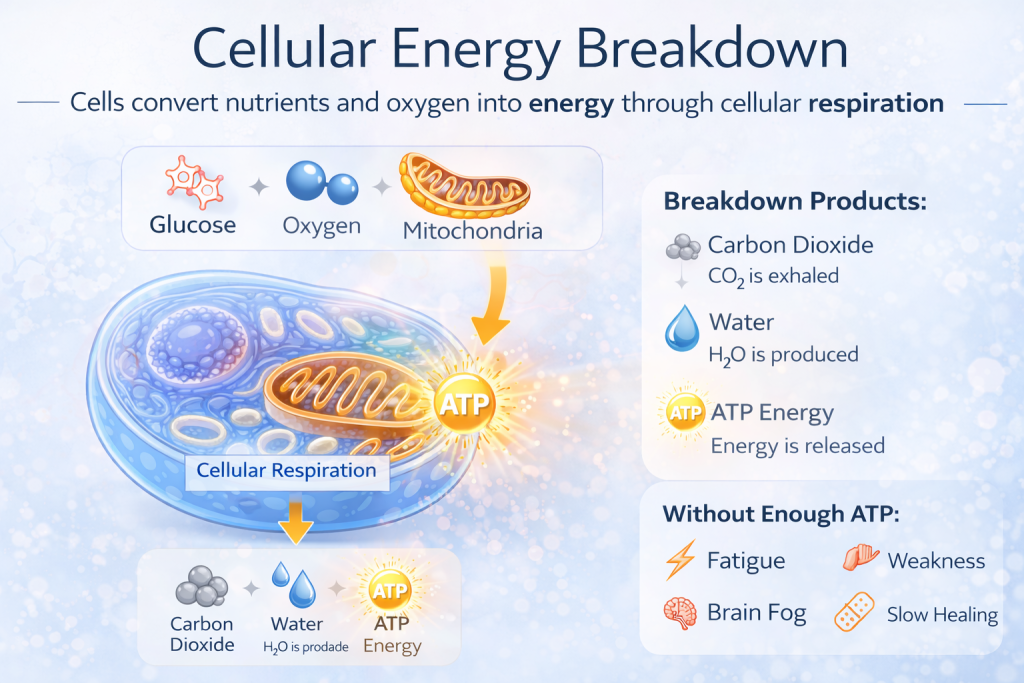
Cellular energy is produced when nutrients and oxygen are converted into ATP inside the mitochondria. When this process is disrupted, cells may not produce enough energy to support normal body functions.